Coumarin family considered an essential heterocyclic compounds which belong to benzopyrones family that contains of phenyl ring fused with a pyrone ring. Coumarin classified into six groups count on chemical structure of compounds and these group are simple (coumarins, bi coumarins, phenyl coumarins, pyrano coumarins, furano coumarins and dihydrofurano coumarins)Coumarin mainly existed in plant kingdom such as (leaves, roots, stems and fruits). Besides, they found in different oils as ‘’lavender oil, cinnamon bark, oil and cassia oil’’.
 Moreover, coumarin derivatives have changed uses such as ‘’optical brightening agents, laser dyes, cosmetic industry agrochemical industries and food additives’’. Furthermore, Coumarin derivatives have important biological activity as antibacterial, antifungal, anti-oxidant, anti-allergic, antiinflammatory, anti-thrombotic, hepatoprotective, anti-viral, anticarcinogenic activities. So, this study involved the biological estimation of N’-(3-(hydroxyimino) butan-2-ylidene)-2-oxo-2Hchromene- 3-carbohydrazide (H2L) and its metal complexes.
Bio-oil is a complex mixture which contains a large number of organic compounds, including alcohol, organic acids, phenol, aldehyde, ketone, etc. Some of these chemicals, such as phenols are important industrial raw materials and additives. The total amount of phenolic compounds in the pyrolysis oil varies from 20.0% to 30% depending on the biomass used and operating conditions. Biooil contains several hundreds of chemicals as a result, it exhibits some inferior properties, such as high water content, high oxygen content, high viscosity low flash point, and strong corrosiveness. These drawbacks make it difficult to be directly used as a vehicle fuel.
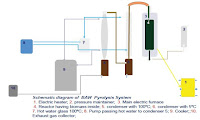
Therefore, several upgrading technologies have been developed to improve the quality of bio-oil, including catalytic hydrodeoxygenation, catalytic cracking, steam reforming, catalytic esterification, supercritical upgrading and so on. Compared with phenols derived from petroleum fuel, these phenolic compounds are renewable and easily obtained. These phenols are not only used as a replacement for phenol in phenol–formaldehyde resins but also as raw materials for developing bio-based antioxidants and many other purposes. Pyrolysis offers the cheapest route to renewable liquid fuels. Nonetheless, many aspects of the pyrolysis pathway are still under investigation.
Polycyclic aromatic hydrocarbons (PAHs) are large group of organic compounds with two or more fused aromatic ring. These compounds are solids with low volatility at room temperature. They are relatively insoluble in water and most can be degraded to simpler substances. Regulatory agencies such as US environmental protection agency (EPA) and agency for toxic substances and disease registry (ATSDR) have defined maximum allowable level of PAHs in the environment due to their adverse health effect to human. Exposure to PAHs can occur from different sources such as water, food and air. Incense burning is associated with many culture and ceremonies in many countries.

The incense materials are used to fragrant the environment and most of the people do not know that this fragrant may cause indoor air problems. Different carcinogenic substances have been detected in incense smoke. The exposure to incense smoke have been found to make lung cancer, asthma, headache, nausea and allergic to skin and eyes. One of the suggestions to prevent lung cancer in the community should include the reduction or minimization of exposures to indoor air pollutants. Beside PAHs, incense burning was found to be the significant source of particulates, heavy metals and volatile organic compounds.
There has been enormous report directed towards the development of novel chemical compounds able to arrest or reverse the development of cancer. Biological activities of transition metal complexes derived from Schiff base ligands are one of the most exhaustively studied topic in coordination chemistry, due to their enhanced activities compared to non - Schiff base complexes. Schiff base complexes show important physiological and pharmacological activities due to their favorable cell membrane permeability. For example, amino acid Schiff base metal complexes have a wide variety of applications including biological, clinical analytical and industrial area in addition to their important role in catalysis and organic synthesis.
The idea of superatom was fruitful for the development of
nanophysics Superatom (quasiatomic nanoheterostructures) consists of a
spherical quantum dot (QD) with radius a, the volume of that contains the
semiconductor (or dielectric) material. QD is surrounded by dielectric(semiconductor) matrix. A hole is localized in the volume of QD, and the
electron is localized over a spherical interface (QD-matrix). In this
nanosystem the lowest electronic level is in matrix, and the lowest hole level
is within volume of QD. A large shift of the valence band (700 meV) generates
the localization of holes in the volume of QD. A significant shift of the
conduction band (about 400 meV) is a potential barrier for electrons.
Benzamide is a carbonic acid amide of benzoic
acid. Amide is a group of organic chemicals with the general formula RCO-NH2 in
which a carbon atom is attached to oxygen in double bond and also attached to
an hydroxyl group, where ‘R’ groups range from hydrogen to various linear and
ring structures or a compound with a metal replacing hydrogen in ammonia such
as sodium amide, NaNH2- Amides are divided into subclasses according to the
number of substituents on nitrogen. The primary amide is formed by replacementof the carboxylic hydroxyl group by the NH2, amino group. An example is
acetamide (acetic acid+amide). Amide is obtained by reaction of an acid
chloride, acid anhydride, or ester with an amine.

Amides are named with adding
‘-ic acid’ or ‘-oic acid’ from the name of the parent carboxylic acid and
replacing it with the suffix ‘amide’. Amide can be formed from ammonia (NH3).
The secondary and tertiary amides are the compounds in which one or bothhydrogens in primacy amides are replaced by other groups. The names of
secondary and tertiary amides are denoted by the replaced groups with the
prefix capital N (meaning nitrogen) prior to the names of parent amides. Low
molecular weight amides are soluble in water due to the formation of hydrogen
bonds. Primary amides have higher melting and boiling points than secondary and
tertiary amides.
 Moreover, coumarin derivatives have changed uses such as ‘’optical brightening agents, laser dyes, cosmetic industry agrochemical industries and food additives’’. Furthermore, Coumarin derivatives have important biological activity as antibacterial, antifungal, anti-oxidant, anti-allergic, antiinflammatory, anti-thrombotic, hepatoprotective, anti-viral, anticarcinogenic activities. So, this study involved the biological estimation of N’-(3-(hydroxyimino) butan-2-ylidene)-2-oxo-2Hchromene- 3-carbohydrazide (H2L) and its metal complexes.


